As the colder months approach, it’s crucial to prepare your personal boat for winter to ensure it remains in top condition when the warmer weather returns. Proper winterization can prevent costly repairs and extend the life of your vessel. Here are some essential tips to help you winterize your boat effectively.
Preparing Your Boat for Winter
Engine and Fuel System
One of the most critical components to address is the engine and fuel system. Start by changing the oil and oil filter to remove any contaminants that could cause damage during the winter months. Flush the engine with fresh water to eliminate salt, dirt, and other debris. This step is especially important for boats used in saltwater.
Next, stabilize the fuel by adding a fuel stabilizer to prevent the fuel from degrading and causing engine problems. Run the engine for a few minutes to ensure the stabilizer circulates throughout the system. Additionally, fill the fuel tank to prevent condensation, which can lead to corrosion.
Battery Care
Remove the battery from your boat and store it in a cool, dry place. Ensure it’s fully charged before storage, and check the charge periodically throughout the winter. This practice will help maintain the battery’s lifespan and ensure it’s ready to go when you need it.
Interior and Exterior Protection
Clean the interior of your boat thoroughly, removing any food, personal items, and electronics that could be damaged by cold or moisture. Consider using a moisture absorber to prevent mold and mildew growth.
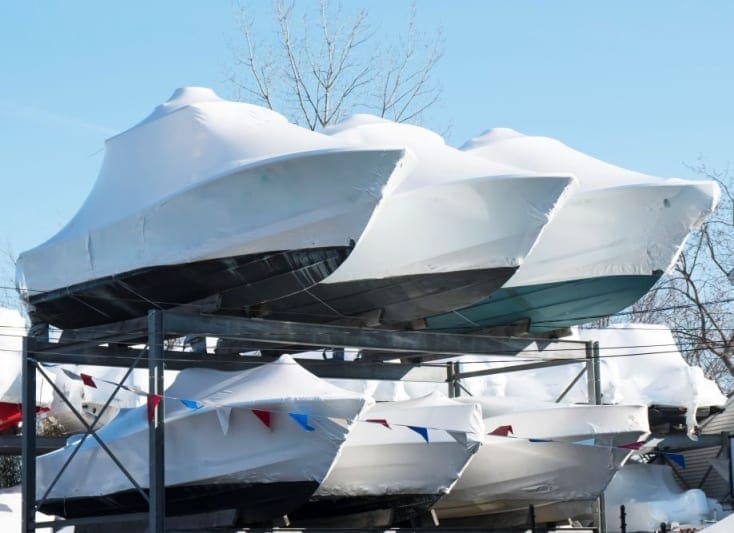
For the exterior, wash and wax the hull to protect it from the elements. Cover your boat with a high-quality cover to shield it from snow, ice, and UV rays. Ensure the cover is secure and allows for proper ventilation to prevent moisture buildup.
Plumbing and Water Systems
Drain all water from the plumbing systems, including sinks, showers, and toilets, to prevent freezing and damage. Use non-toxic antifreeze in the plumbing system to ensure any remaining water doesn’t freeze.
Safety Equipment
Inspect and remove all safety equipment, such as life jackets, flares, and fire extinguishers. Store these items in a dry place and check their condition and expiration dates before the next boating season.
Taking these steps will help protect your boat from the harsh winter conditions and ensure it’s ready for a smooth launch in the spring. For more personalized advice or assistance with your boat’s insurance needs, feel free to reach out to our agency. We’re here to help you safeguard your investments and enjoy peace of mind year-round.